
Boarding designed around routine, observation, and choice.
Cats in the City provides private, enriched boarding for kittens, adults, seniors, bonded cats, medication-dependent cats, and complex care plans. The system connects lodging with grooming, transport, feeding support, and veterinary escalation when needed.
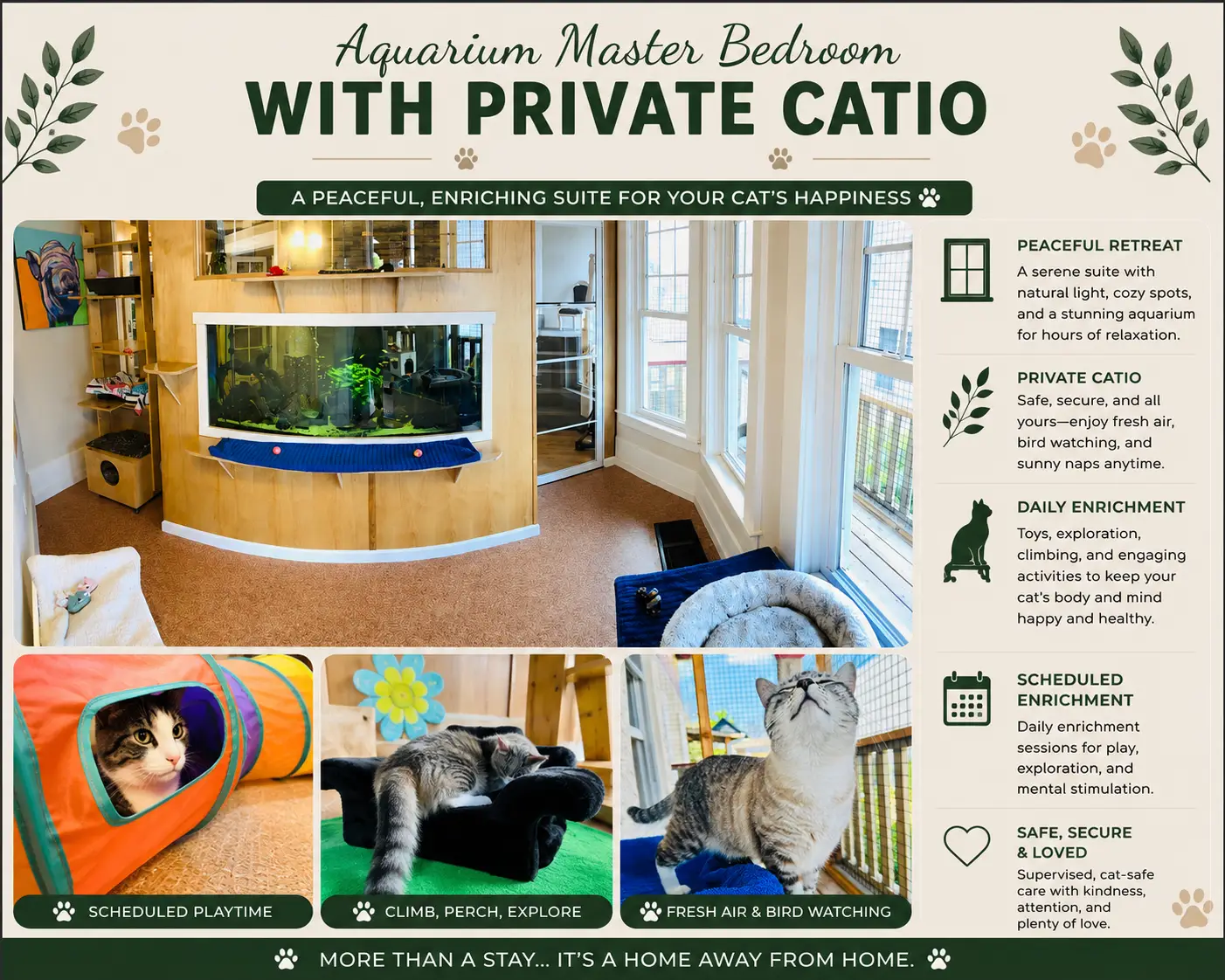





The care plan should match the cat, the stay, and the household goals.
Routine boarding and medically complex boarding are not the same service design. The intake process helps determine the appropriate location, staffing, monitoring, and contingency plan.
Private feline suites
Home-like spaces with vertical options, hiding choices, familiar bedding, and room for individualized routines.
Enrichment and movement
Care plans may include play, social interaction, environmental exploration, sensory enrichment, and rest according to the cat’s preferences.
Feeding and intake observation
Staff monitor appetite, food acceptance, elimination, hydration indicators, and changes that may signal stress or medical concern.
Medication support
Oral, topical, and other approved medication routines are incorporated into the boarding plan with clear instructions and tolerance information.
Diabetic boarding
Available through the appropriate care setting with real-time observation, glucose-informed decisions, insulin safety, and emphasis on preventing hypoglycemia.
Review complex care →Extended stays and transitions
Longer stays can include structured adaptation, grooming, transportation, medical coordination, and transition planning when the situation is larger than travel.
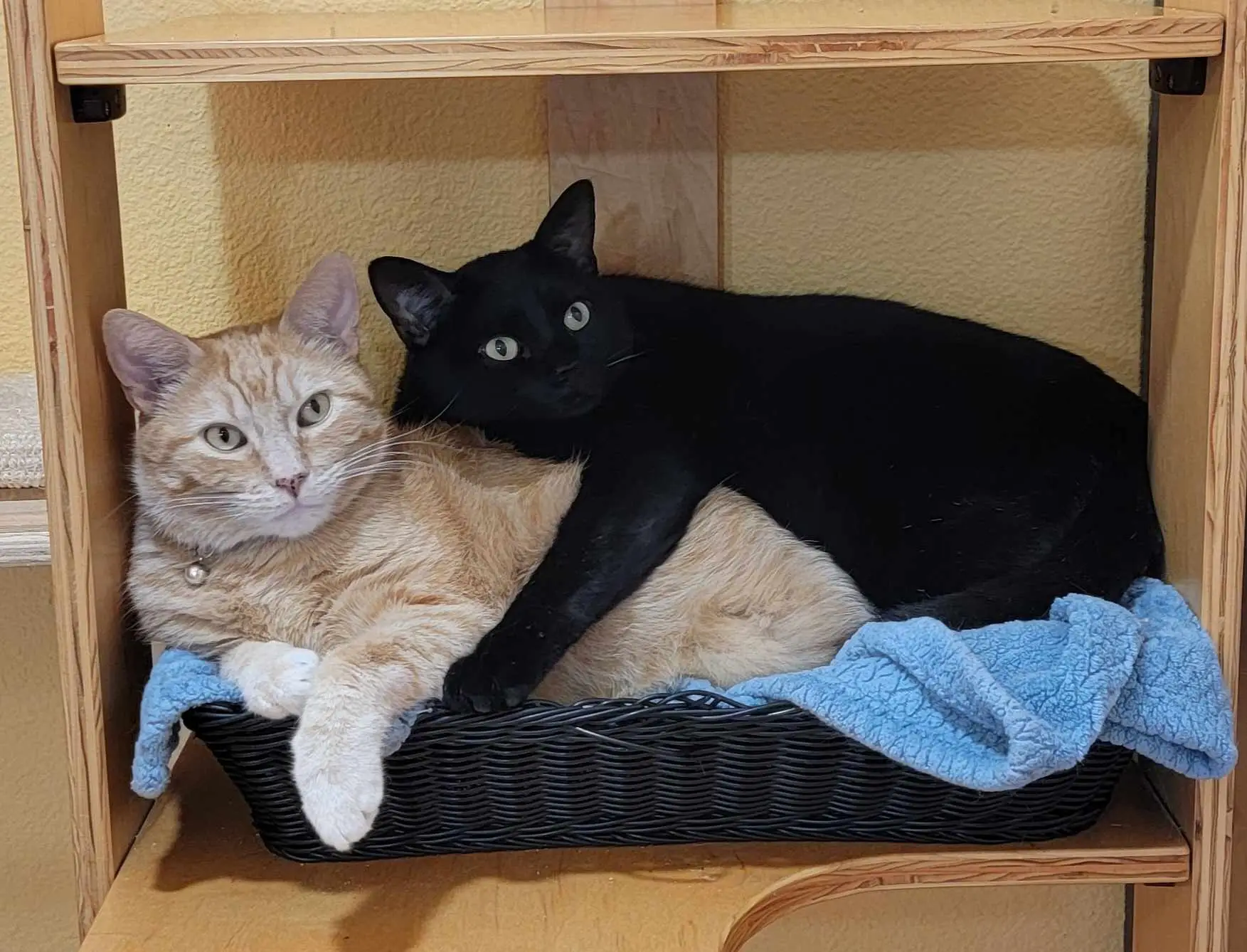
Boarding can reveal how a cat functions outside the home routine.
A change in appetite, medication tolerance, elimination, social behavior, movement, or sleep can be situational—or it can reveal a care problem that needs attention. Structured observation helps the team respond earlier.
A boarding stay can coordinate multiple practical needs.
Transportation, grooming, medication, veterinary communication, and transition support can be connected rather than handled as unrelated tasks.
Good boarding begins with specific, usable information.
Provide current feeding instructions, medication details, recent veterinary changes, behavioral triggers, preferred routines, emergency contacts, and any history of appetite loss during transitions.
Choose a location
Match geography with service availability and complexity.
Build the profile
Share food, medication, health, behavior, and emergency information.
Adapt the stay
Care is adjusted as the cat’s actual boarding response becomes visible.
Connect next steps
Grooming, transport, veterinary contact, or transition support can be added when appropriate.
Start at Portland Cat Boarding or route through Cats in the City.
For diabetic, medically complex, appetite-sensitive, or highly medication-dependent cats, contact the team before finalizing the location.