
Cat grooming built for the cat who actually arrives.
Cats in the City provides feline-only grooming for routine maintenance, advanced matting, coat compaction, hygiene restoration, claws, senior mobility, medical complexity, and cats who need care adapted in real time.
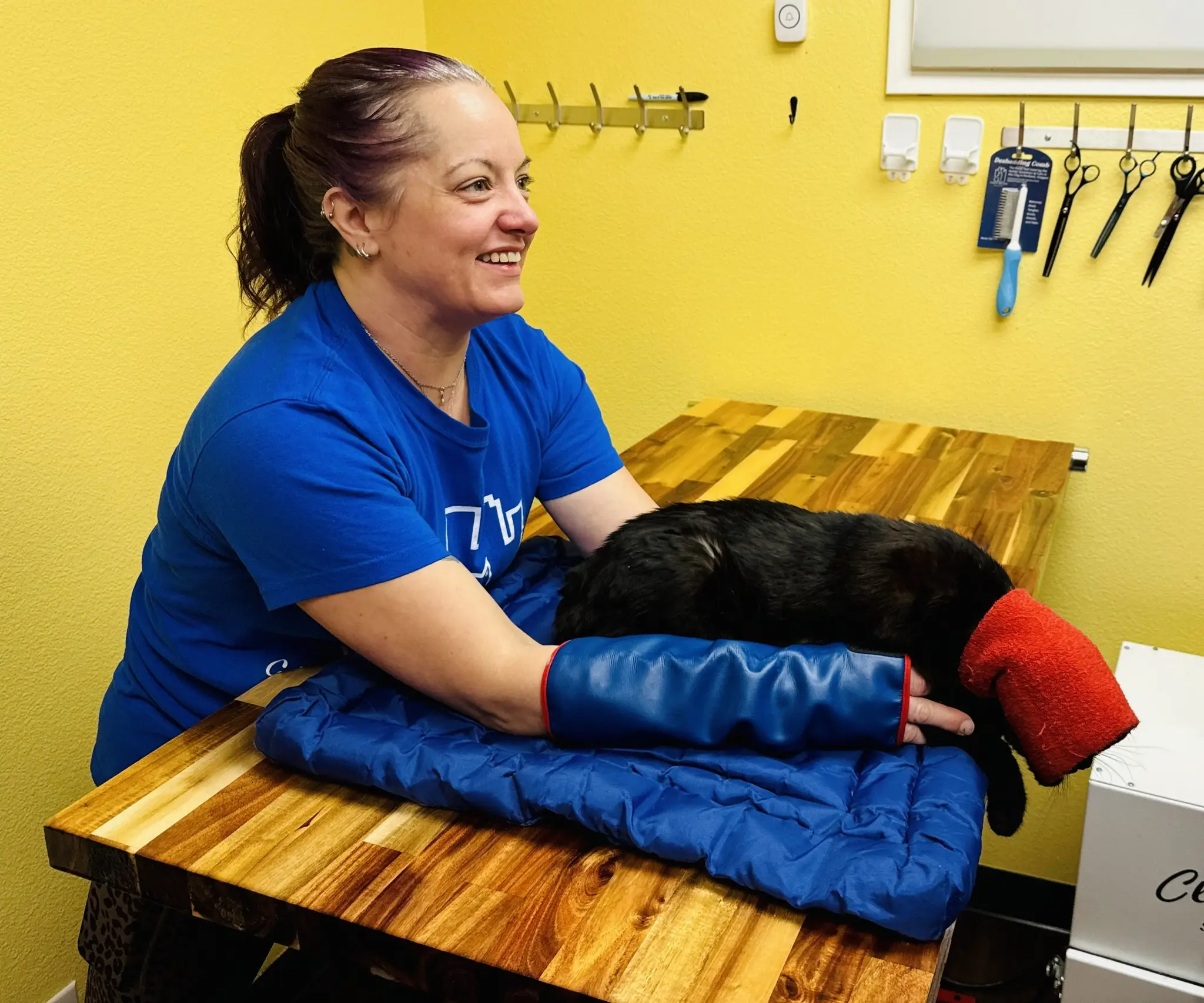





Grooming needs range from maintenance to full-body functional recovery.
The starting problem may be visible coat burden, but the care plan can also involve mobility, medical conditions, sensory sensitivity, handling history, and guardian capacity.
Routine coat maintenance
Bathing, deshedding, comb work, sanitary care, and scheduled maintenance designed around coat type and the cat’s tolerance.
Matting and pelting
Assessment and removal of fused, felted, webbed, or pelted coat with attention to skin, movement, anatomy, and hidden complications.
Claw and paw care
Routine trimming, ingrown claw identification, claw-bed observation, and modified care for cats with arthritis or handling sensitivity.
Senior and mobility-aware grooming
Positioning, pacing, and task selection adapted for arthritis, weakness, balance changes, amputation, blindness, deafness, and frailty.
Medically complex cats
Care planning for cats with heart murmurs, kidney disease, hyperthyroidism, diabetes, skin disease, medication needs, or veterinary restrictions.
Hygiene and functional reset
Coat decontamination, fecal or urine burden, severe dandruff, grease, compression, and hygiene problems affecting daily function.
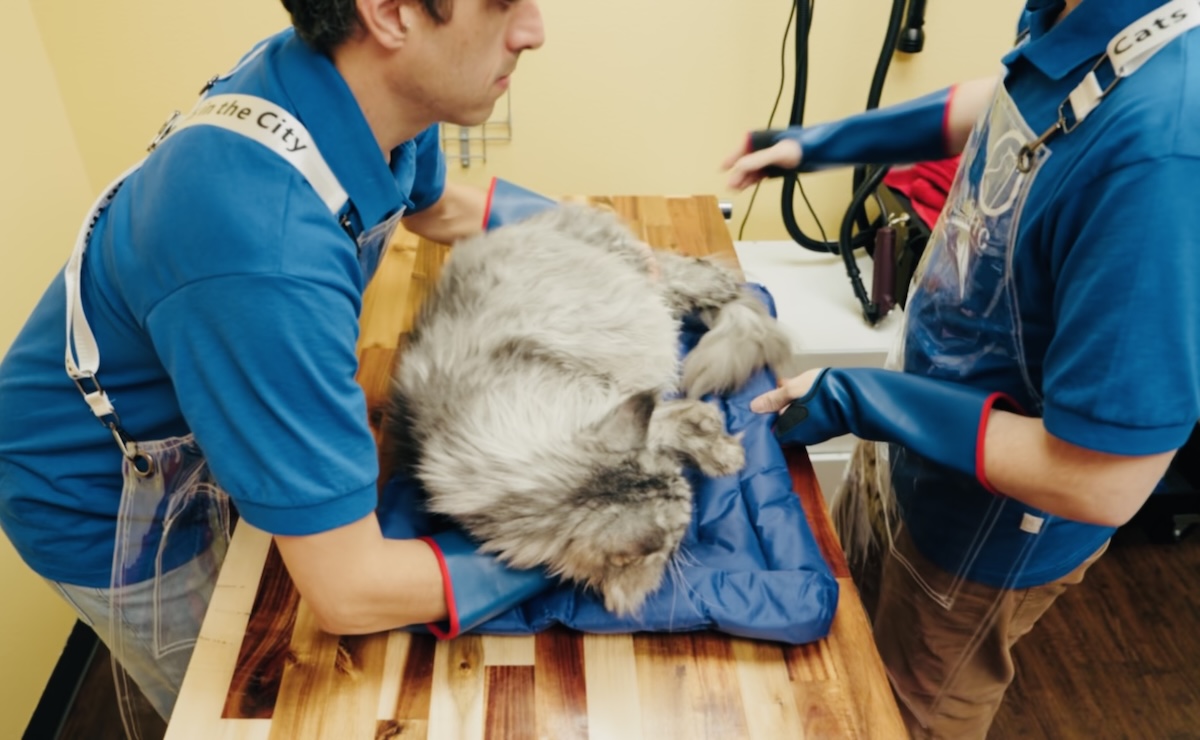
Grooming is a live interaction, not a fixed sequence of holds.
TANDEM Cat® care separates the handling role from the grooming role. The support person monitors movement, breathing, balance, sound sensitivity, and the cat’s ability to remain organized while the groomer completes the task.
The grooming plan changes with the whole cat.
Cats in the City’s media library documents senior, cardiac, arthritic, sensory-impaired, tripod, hyperesthetic, severely matted, and medically sensitive cats receiving modified care.
Age and mobility
Comfort-focused grooming for cats whose balance, flexibility, stamina, or joint health has changed.
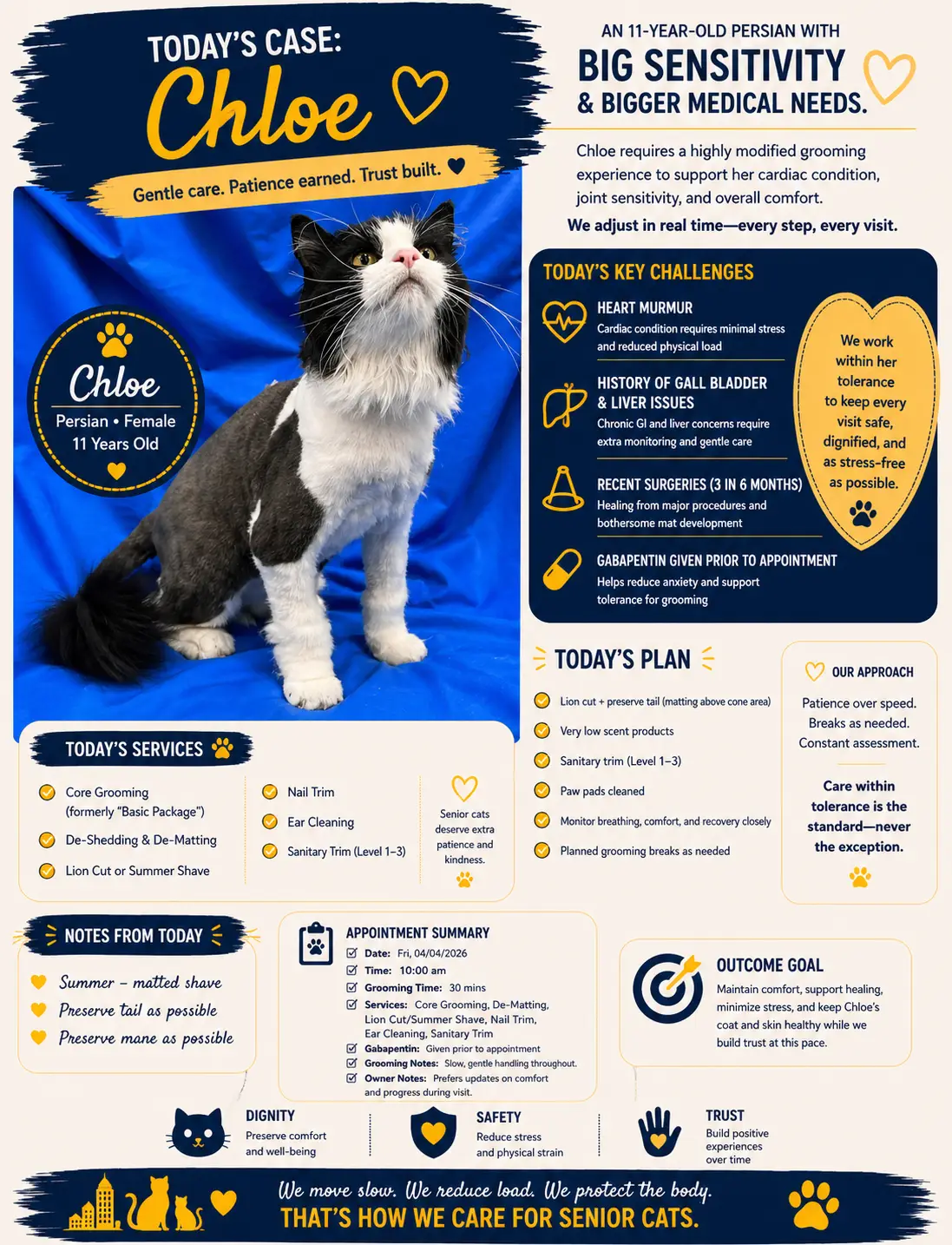
Modified care
Lower-stimulation, task-prioritized grooming for cats with cardiac or systemic considerations.
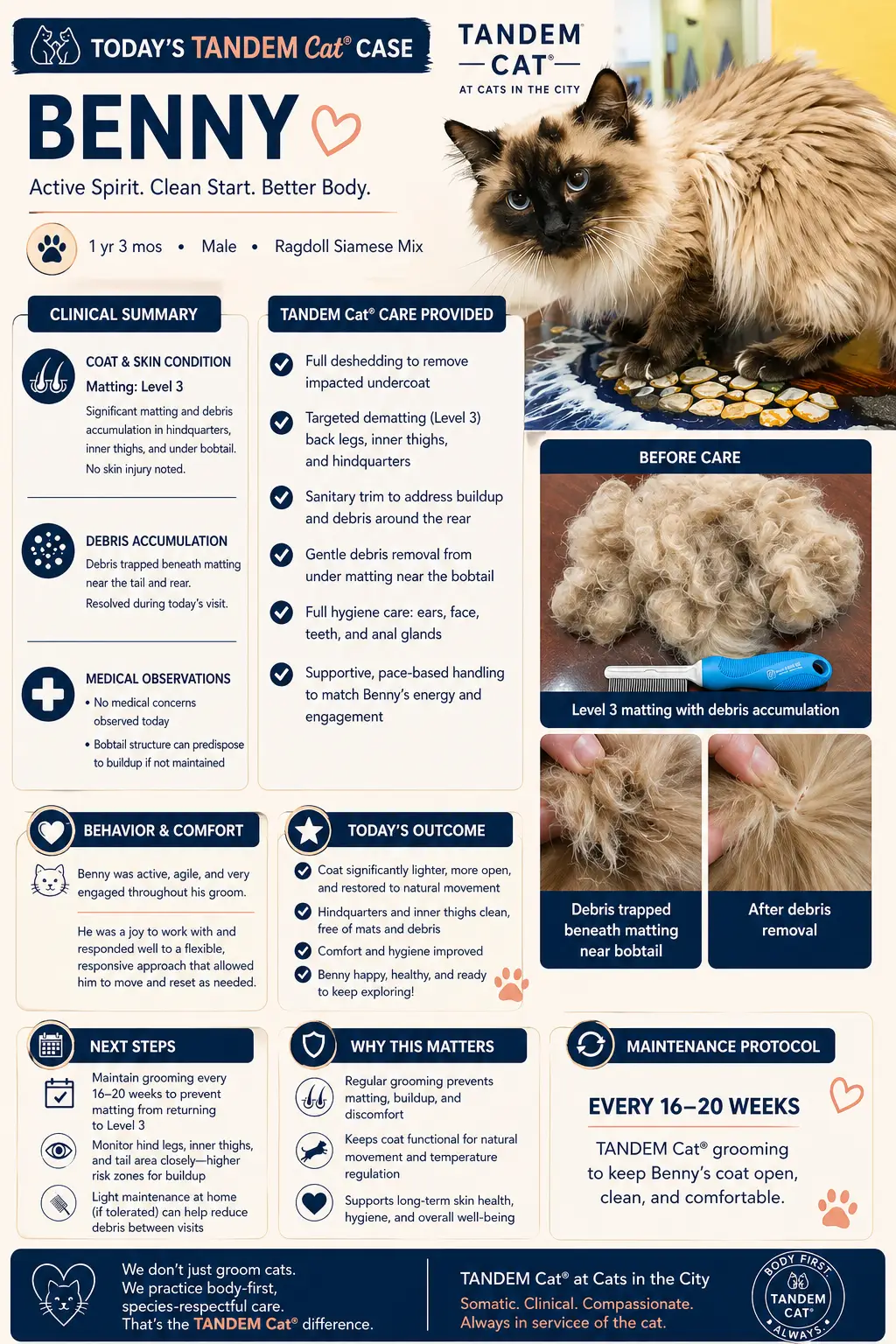
Matting recovery
Removing dense coat restriction while protecting skin and restoring movement and hygiene.
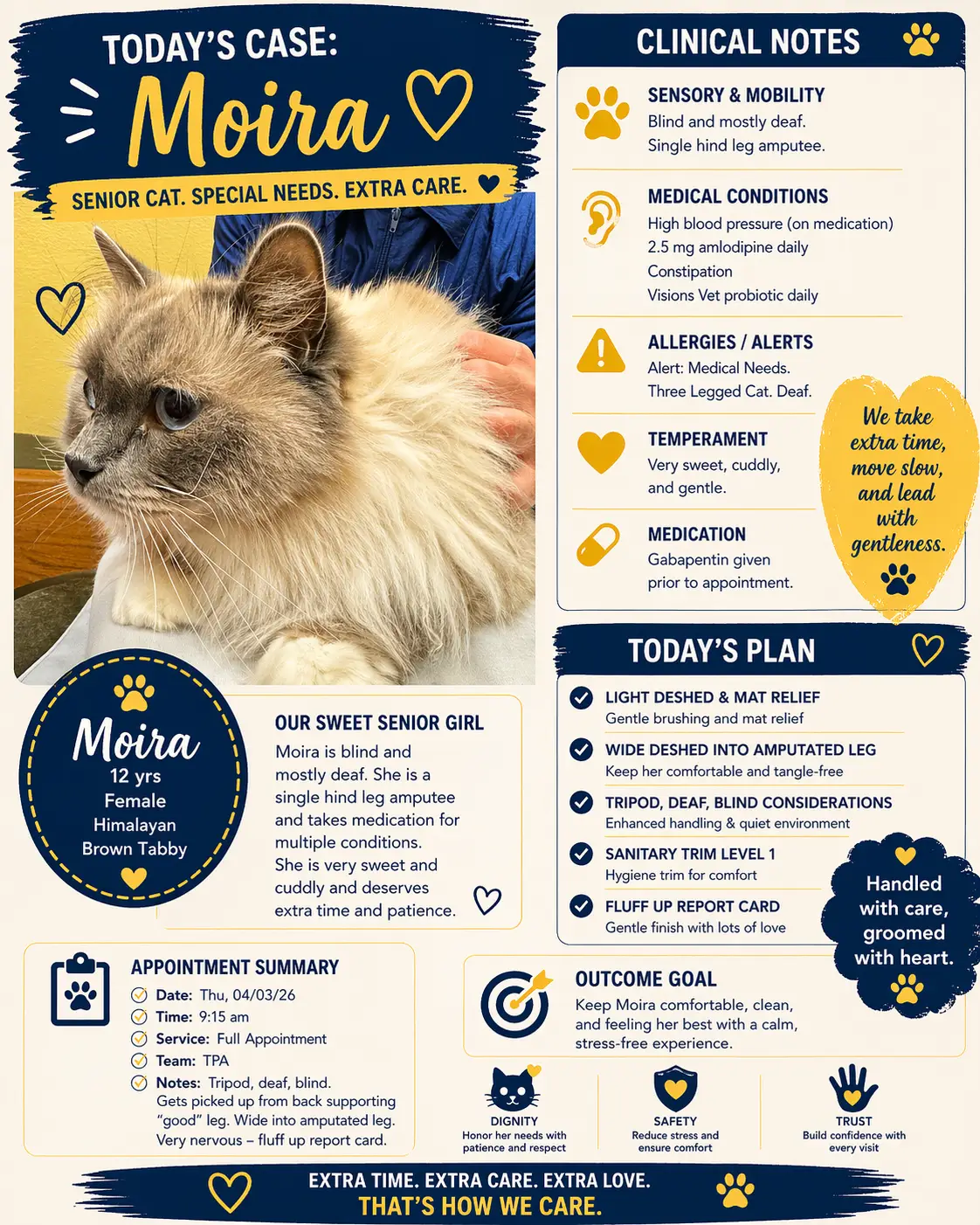
Sensory and limb differences
Care adapted to blindness, deafness, amputation, asymmetry, and altered balance.
A grooming appointment is planned around the cat, the coat, and the goal.
Some cats complete a full service in one visit. Others need modified scope, medication planning, veterinary clearance, staged care, or rescheduling when safety or tolerance requires it.
History
Share age, health, medication, behavior, prior grooming, and current coat concerns.
Assessment
The team evaluates coat condition, movement, tolerance, and hidden care needs.
Adaptive care
Tasks, positioning, pacing, and tools are adjusted in real time.
Aftercare
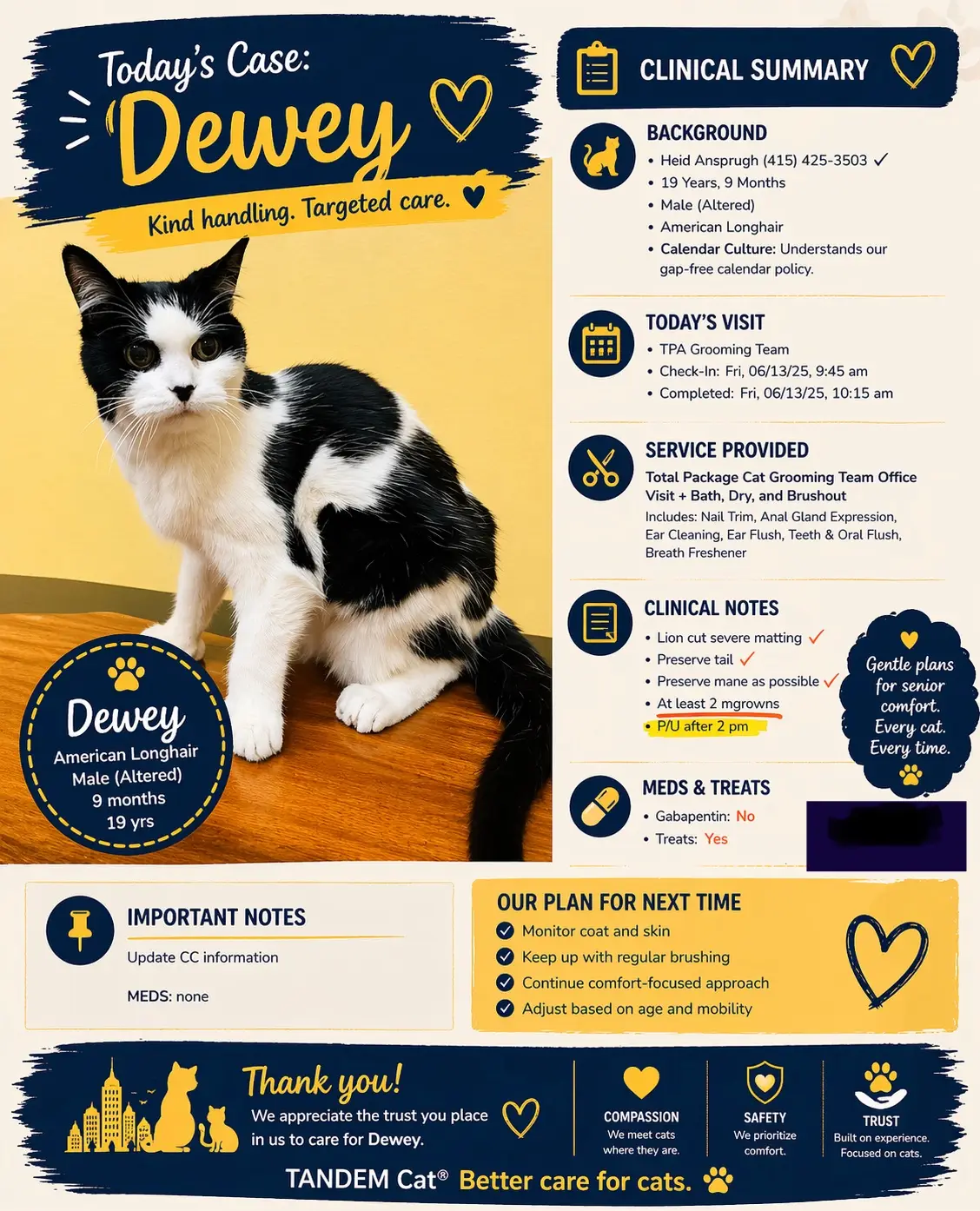
Guardian notes document care provided, observations, recommendations, and next steps.
Choose a Cats in the City location or review the grooming-specific site.
For complex cases, include as much medical and handling information as possible before the appointment.