
When the home care system is failing, stabilize before surrender.
Structured Rehab is a residential assessment and stabilization pathway for cats whose behavior, feeding, medication, litter-box use, grooming, health management, or household routines have become mutually destabilizing.



The problem is often a system, not a “bad cat.”
Rehabilitation looks at the relationship among the cat’s body, behavior, environment, routines, guardian capacity, medical needs, and prior learning.
Feeding instability
Food refusal, narrow food acceptance, transition anorexia, inconsistent schedules, multi-cat competition, or caregiver difficulty sustaining the plan.
Medication breakdown
A medically necessary routine is not reliably tolerated, administered, documented, or integrated into daily life.
Litter-box dysfunction
Elimination problems may involve pain, mobility, box design, household conflict, cleanliness, access, substrate, or environmental instability.
Handling and care conflict
Grooming, claws, transport, veterinary care, or ordinary household tasks repeatedly escalate into fear, avoidance, aggression, or abandonment risk.
Household incompatibility
Noise, children, other animals, space, work schedules, housing restrictions, illness, or caregiver capacity may exceed the current system’s ability to adapt.
Pre-rehoming stabilization
Some cats need medical, behavioral, grooming, medication, or environmental stabilization before an honest and sustainable placement can be designed.
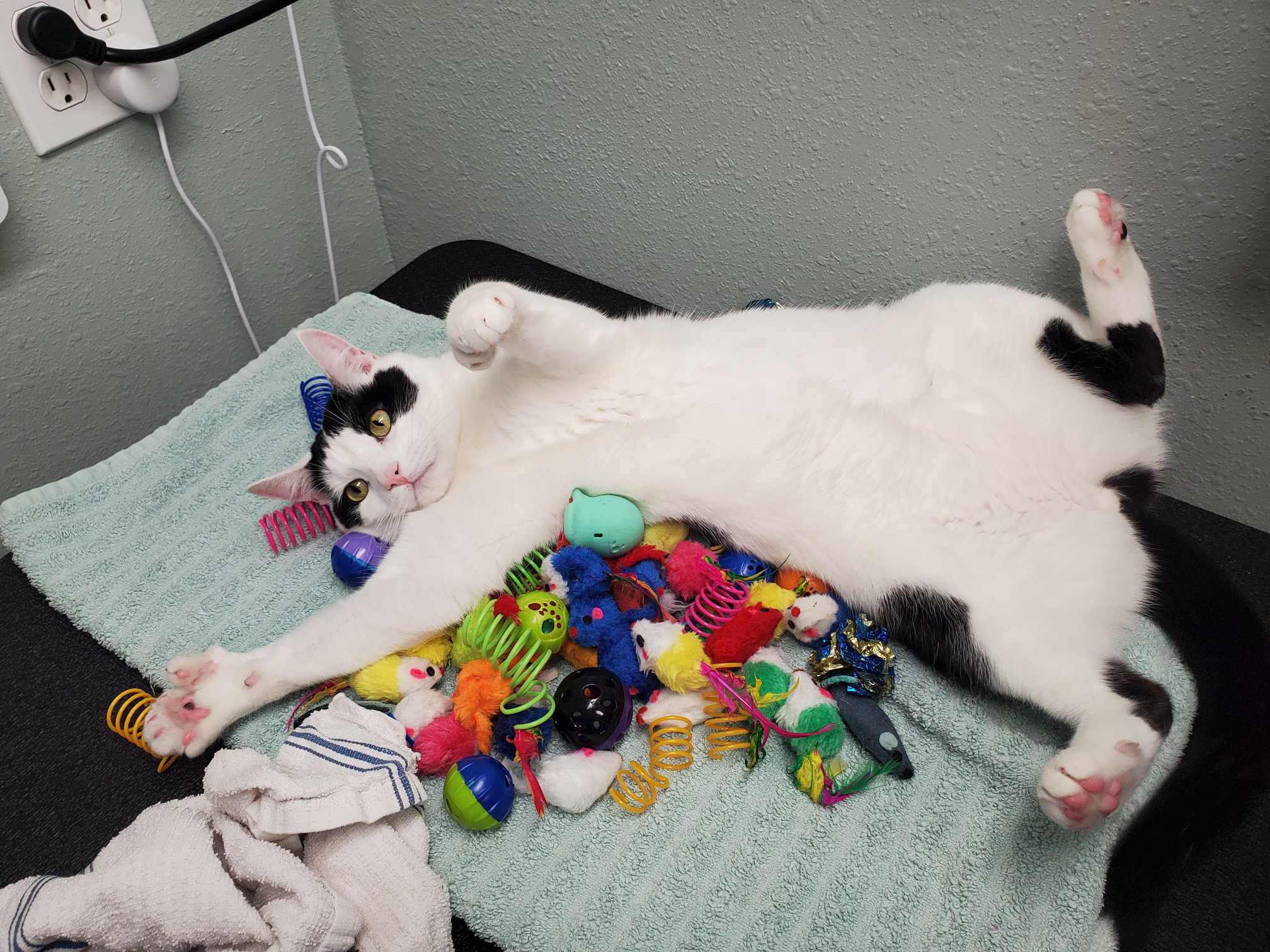
Separation from the failing system creates diagnostic clarity.
A structured environment can help distinguish what travels with the cat from what is produced or amplified by the home context. Staff can observe food, elimination, medication, sleep, movement, social behavior, play, grooming, sound sensitivity, and recovery over time.
Rehabilitation does not promise one predetermined destination.
The process may support return home, a modified care plan, ongoing services, veterinary intervention, a different household design, structured rehoming, or rescue placement.
Assessment, stabilization, testing, and transition planning.
The length and scope vary with the problem, medical needs, available records, and the decisions that need to be made.
Intake and records
Clarify the current breakdown, medical history, risks, routines, and desired outcomes.
Residential baseline
Observe the cat in a structured environment with consistent care and documentation.
Intervention and testing
Adjust feeding, medication, handling, grooming, enrichment, litter, and environmental variables.
Transition plan
Define the next setting, supports, disclosures, and continuity requirements.
Start with FELINE TRANSITIONS® when the destination is not yet clear.
Assessment can help prevent premature surrender, unsupported return home, or a placement that repeats the same failure.